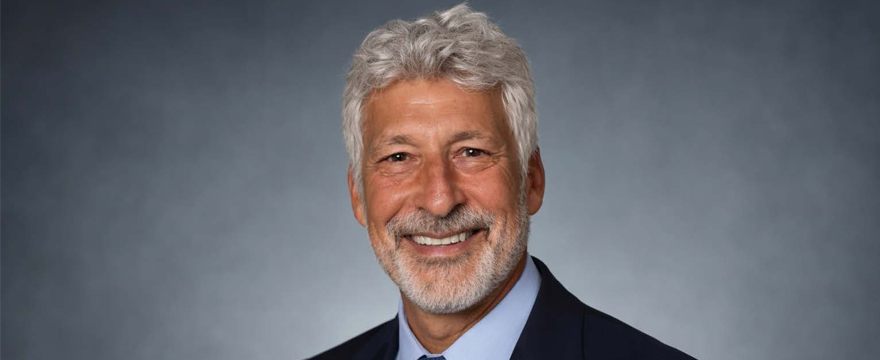
Dr. John Weaver graduated from Bucknell in 1978 with a chemical engineering degree. He spent 33 years as an academic neurosurgeon in Massachusetts and Pennsylvania, and now advises the care of individuals who suffer catastrophic spine or brain injuries. John earned a master’s degree in chemical engineering from Case Western Reserve University and, following a stint working at DuPont, a doctor of medicine degree from the University of Texas Medical Branch. He currently lives in Spofford, New Hampshire, and Boston, Massachusetts.
Q: Why did you choose to attend Bucknell?
A: I sought an excellent engineering program not so close to home as Lehigh or Lafayette. Princeton and Dartmouth determined that I should go to Bucknell (I wonder if I’m still on their waitlists?).
Q: What drew you to chemical engineering as a major?
A: I loved chemistry, math and physics in high school, so it seemed logical to combine these studies in engineering. I recall reviewing a list of majors and basically checked a box to make the decision. Back then there were few resources and little guidance to explain all the possible choices, but it seemed that chemical engineering represented most everything in which I was interested.
Q: What did you do in your early years after Bucknell?
A: Although there were great chemical engineering job opportunities in 1978, none seemed to be a great fit and I reasoned that more education would help me make a better career choice. At Case Western Reserve, the math that I so loved quickly became more challenging and I found my cognitive ceiling in the second year of graduate school. New computer languages and applications were really interesting, and my mentor was working with material and electrical engineers to develop a glucose sensor as a biologic circuit and that became my research and thesis project.
After two years of wearing a hard hat, climbing distillation columns and computer modeling plant operations it was clear that DuPont was going to move me to another position as part of their career development plan. Perhaps because of that somewhat solitary workplace experience and the notion of medical school simmering since graduate school, I applied to the Texas medical schools where I was a resident and was accepted at the University of Texas Medical Branch in Galveston.
Q: Can you share a little about your career highlights?
A: DuPont proved to be a great company and they were very supportive of career development. As part of a small research team located at a large petrochemical plant site, we had significant autonomy and although I reported to a supervisor at the plant, the rest of our team was in Wilmington, Delaware. My Bucknell and graduate education prepared me well so I could work with the process supervisors and engineers at the plant as well as the research engineers in Wilmington. I created computer models of the plant operations that were then replicated and optimized at the semi-works in Wilmington.
When considering the change to medicine and the departure from industry, DuPont management was transparent to review with me the career path that they envisioned, including future anticipated moves to the corporate offices, to other product lines, to marketing, etc. They were candid and supportive which gave me real data to make an exceptionally difficult career decision.
Q: What do you find most rewarding about the work you do professionally?
A: I am retired from clinical medicine after working 33 years as an academic neurosurgeon in Massachusetts and in Pennsylvania. I now work for a company where I can advise the care of individuals suffering catastrophic spine or brain injuries.
As a neurosurgeon, I found great fulfillment developing interpersonal relationships with patients who often needed to be quickly established, especially following a traumatic brain or spine injury or with a new diagnosis of a cancer or vascular problem in the brain. I thrived and tested myself with the high risk and technical demands of some surgeries, and we were fortunately rewarded with the frequent ability to save a life or restore some lost function.
Q: How has your engineering background shaped the way you think or solve problems in your career?
A: My chemical engineering background gave me time management structure and persistence to rethink and re-engineer problems. It also gave me the structure of priority and also fault prediction, which was important in surgery. In brain and spine surgeries, the ChemE background also helped me assess and apply biologic materials and to critically assess mechanics when performing an instrumented spinal fusion.
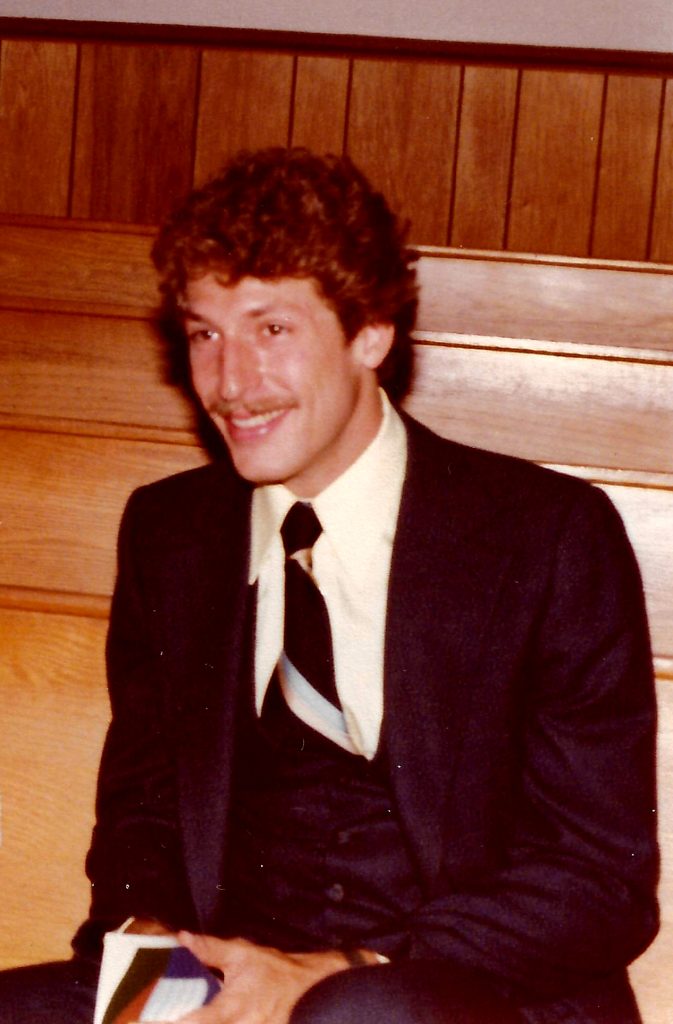
Q: What did you like best about the College of Engineering at Bucknell?
A: Aside from the remarkably convenient location being across the street and a three-minute walk from Delta Upsilon where I lived for three years, it was the small class size.
Q: Were there any classes, professors or experiences at Bucknell that had a big impact on you?
A: Dr. James Pommersheim allowed me the opportunity to collaborate on a research project and co-author an AIChE presentation. I especially enjoyed the concepts of fluid mechanics which was a special interest for Dr. Pommersheim.
I probably took a few electives but the most impactful was ‘Art in the Dark’ which was a wonderful class with the slide carousel illuminating the dimly lit classroom. The following summer with a classmate we cycled for almost three months through Europe and I enjoyed seeing so much of the art I so recently experienced.
Q: Looking back, what was one of your most meaningful experiences as a student?
A: An impactful experience was in re-engaging with music. After a frustrating academic end to my sophomore year, I returned my junior year and started taking piano lessons again, playing daily and had opportunities to perform. The joy of the music, the rebalancing of time and priorities somehow sparked greater interest in my classes and overall college experiences and it showed in my junior-year grades.
Q: How did going to Bucknell prepare you for your professional career?
A: The Bucknell engineering education prepared me very well for both graduate education and the work environment at a petrochemical plant. The chemical engineering curriculum was always challenging for me and I think that background gave me the ‘grit’ to complete the very rigorous neurosurgery training program and then to push through a challenging work schedule.
Q: How did your Greek life experience at Bucknell make a lasting impact?
A: Joining the Delta Upsilon brotherhood, I lived in the fraternity house for three years. There was great camaraderie and support with more influence from other class years than I would have expected to have otherwise. A few became lifelong friends and now later in life re-connecting with other fraternity brothers has been really nice.
Q: What is something you wish you had known as a student that you know now?
A: I wish I knew that faculty are more approachable and interested in helping students than I realized at the time. It’s easy to think that you are the only one who doesn’t understand something or that there is shame in admitting that to a peer or teacher. I was simply too embarrassed to go to a faculty office when I didn’t understand a concept, and I sure wish I had done so in PChem!
Q: What advice do you have for current Bucknell Engineering students?
A: Engineering sets you up for any and all career paths — ask about all the professional adventures possible. Don’t hesitate to talk to your faculty and advisors. Take other interesting classes and be diverse in extracurricular activities.